

TRANSPORT
Mobility
is essential to our modern way of life. The efficient transport of goods has
become key to our ever more globalised economy. Freight, for example, has
almost doubled over the past 30 years.1
Steel
provides strong, safe and sustainable transport solutions
Steel
facilitates our mobility and the transport of goods. Whether in the form of
bicycles, motorcycles, cars, buses, trains, ships or planes – or in the
transport networks that support them – steel is essential to every mode of
transport. Continuously reinforced concrete roadways are structurally supported
by steel rebar and help to improve fuel efficiency for large vehicles.
Steel
is well-suited to transport applications because it is durable, strong
(providing safety in the case of collision), lightweight, UV-resistant,
affordable, and 100% recyclable. Innovations in design and the development of
new high-strength steels have also played a key role in improving the
efficiency of many of these transport modes whilst at the same time
considerably reducing life cycle greenhouse gas (GHG) emissions (see automotive
section).
How
steel is used in transport
Including
automotive, around 16% of steel produced worldwide is used to meet society’s
transport needs. Steel is also essential to the related infrastructure: roads,
bridges, ports, stations, airports and fueling.
Some
major applications include:
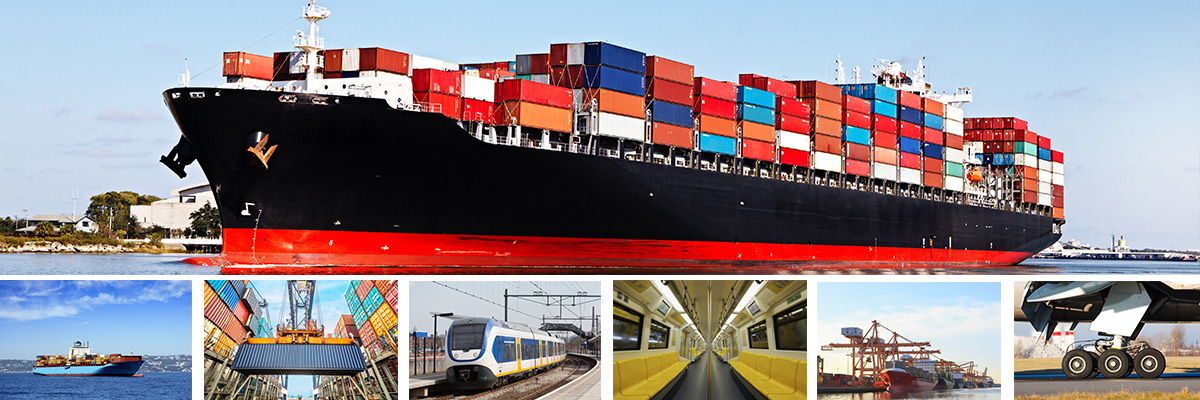
For ships and shipping
containers
Shipbuilding
traditionally uses structural steel plate to fabricate ship hulls. Modern
steel plates have much higher tensile strengths than their predecessors,
making them much better suited to the efficient construction of large
container ships. A particular type of plate is available with a designed
resistance to corrosion, ideal for building oil tankers. Such steels make
possible much lighter vessels than before, or larger-capacity vessels of
the same weight, offering significant opportunities to save on
fuel consumption and hence CO2. Shipping containers are also
made of steel. In 2012, an estimated number of 20.5 million containers of
varying types made up the worldwide container fleet.2
For trains and rail cars
Rail
transport requires steel in the trains and for the rails
and infrastructure. For short or medium haul journeys, rail
reduces travel times and CO2 emissions per passenger kilometer
compared to nearly all other forms of transport.
Steel
makes up 20-25% of the mass of high speed trains.The main steel components of
these trains are bogies (the structure underneath the trains including wheels,
axels, bearings and motors). Freight or goods wagons are made almost entirely
of steel.
For aeroplanes
Steel
is required for the landing gear.
For infrastructure
Transport
networks: steel is used in bridges, tunnels, rail track, and in constructing
buildings such as fueling stations, train stations, ports and airports. About
60% of steel use in infrastructure is rebar. The rest is sections and rail
track.
Footnotes:
1
Metz, B., Controlling Climate Change, 2010, Cambridge
2. World Container Fleet Overview, retrieved September 2015.