

ENERGY
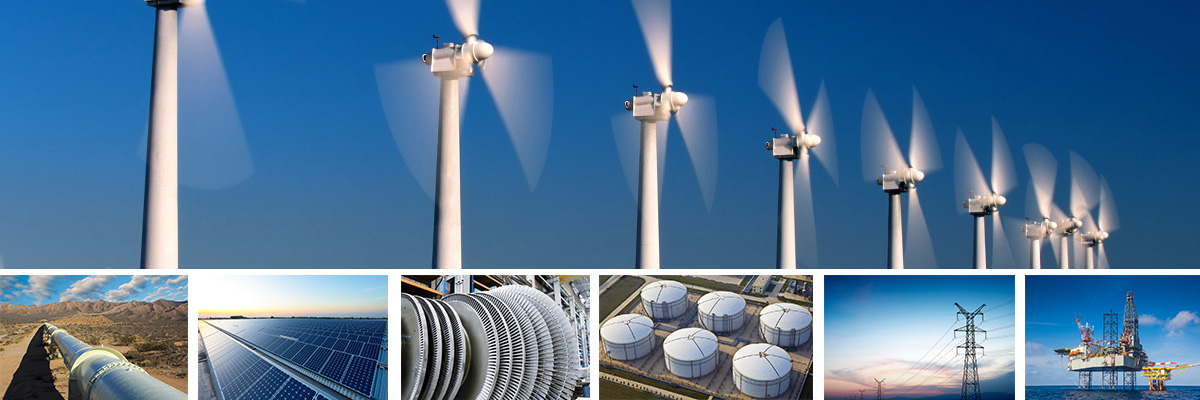
Energy
is essential for development. Worldwide 1.3 billion people continue to
live without access to electricity, equivalent to 18% of the global population.
Nearly 97% of those without access to electricity live in sub-Saharan Africa
and developing Asia. Giving everyone access will require strong growth in
energy supply. Global energy demand is set to grow by 37% by 2040, according to
IEA.1
Steel
is critical for supplying the world with energy. Whether based on fossil fuels,
nuclear technology or renewables, steel is indispensable in producing and
distributing this energy. Steel also has an important role to play in improving
the efficiency of these energy sources.
Steel is used in all areas of
renewable energy.
● Biomass: steel is used extensively in agriculture.
● Solar: steel plays a key role in converting solar energy into
electricity or hot water. It is used as a base for solar thermal-panels
and in pumps, tanks and heat exchangers.
● Wave and tidal: a steel pile is the main component of a tidal turbine in tidal
energy systems. Steel is also used to fabricate wave energy devices. The
steel used is formulated to withstand the challenges of the marine
environment.
● Hydroelectric: steel is needed to reinforce concrete dams.
● Wind: steel is the main material used in onshore and off-shore wind
turbines. Almost every component of a wind turbine is made of steel,
from the foundation, to the tower, gears and casings (see Steel Solutions
in the Green Economy: Wind turbines).
Steel is used in nuclear and
fossil fuel-based energy:
● Mining equipment
● Offshore oil platforms
● Equipment for oil and gas
extraction and production
● Natural gas and oil pipelines and
storage tanks
● Power plants.
Steel is used for the
production and distribution of electricity:
● Transformers (magnetic steel core)
● Generators and electric motors
● Power distribution pylons and
steel-reinforced cables.
Steel is used for energy
transport and distribution:
● Ships, trucks and trains used to
transport fuel
● Transport networks: steel is
required for bridges, tunnels, rail track, and in constructing buildings
such as fueling stations, train stations, ports and airports.
Innovative steel solutions
contribute to improved efficiency
Below
are a few examples of how steel is being used to improve the efficiency of
energy production.
Transformers: Transformers step down the voltage from power stations to household voltage.
The magnetic core of transformers is made of steel. As a result of continual
development and increased application of new electrical steel grades, the
energy loss in modern transformers can be reduced by 35% compared to
conventional ones.
Wind towers: Steel provides
the strength for taller, more efficient wind turbines.
Fossil fuel power plants:
● High temperature-resistant steels
have made efficiency in steam power plants possible and have the potential
to be developed and employed even further.
● Combined heat and power (CHP)
allows waste heat in power plants to be used for power generation as heat
energy, increasing the overall efficiency of fossil fuel power plants. The
waste heat is transported exclusively in steel pipes.
● Steel’s role in energy production
and distribution.
Footnote:
1 International Energy Agency, World Energy Outlook 2014, page 1, ‘central
scenario’.